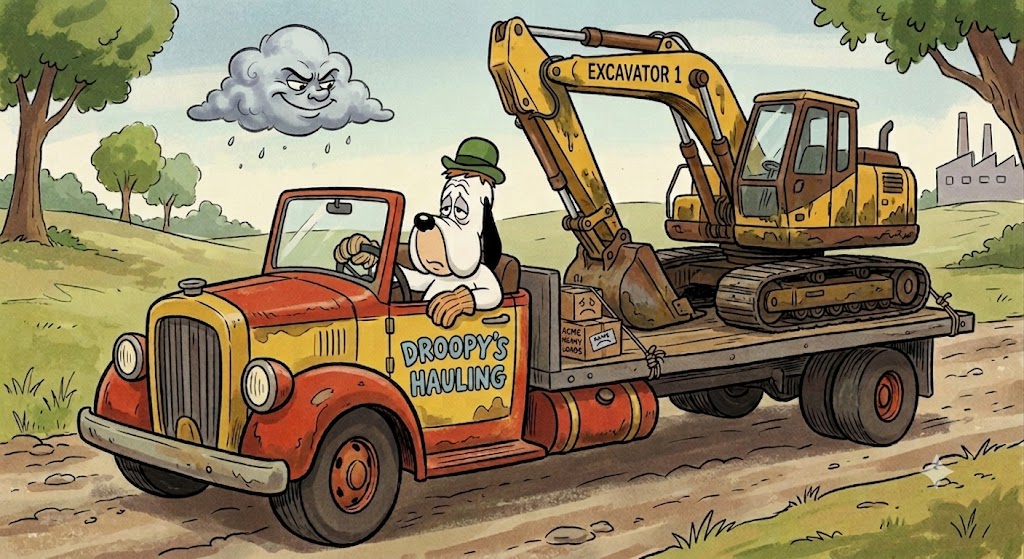
In the heavy equipment world, a busy yard or a crowded job site is an illusion of health.
You can have millions of dollars in iron moving dirt every single day, yet your bank account tells a completely different story at the end of the quarter. This is the “Iron Bleed“—the slow, quiet erosion of profit margins caused by a failure to accurately calculate the true cost of asset velocity, ownership vs. rental cycles, and multi-site mobilization.
When moving from small-scale contracting to seven-figure industrial projects, standard pricing models fall apart. If you want to scale a heavy machinery operation without driving yourself into a financial corner, you have to master two critical metrics: True Asset Velocity and The Zero-Margin Mobilization Radius.
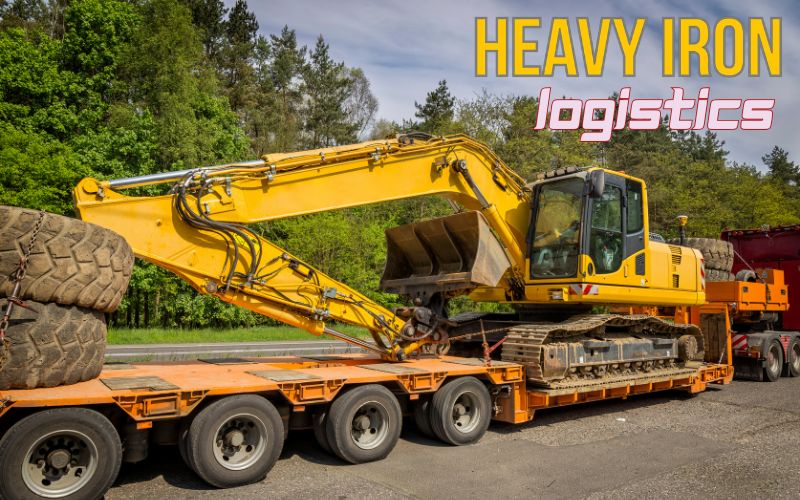
Demolishing 3 Common Traps for Earthwork Business Owners
The right attitude can make or break any construction company, but scope creep and “the way we’ve always done it” can keep an otherwise skilled operator from breaking through to the next level.
1. The Trap of the “Busy” Machine (Asset Velocity)
Most operators calculate profitability based purely on the hourly rate a machine commands on site. If an excavator brings in $150 an hour, it looks profitable.
But true profitability requires looking at the Asset Utilization Cycle. A machine sitting idle in your yard for two weeks waiting for parts or a site delay doesn’t just stop earning—it actively drains capital through financing, insurance, and deprecation. If your utilization rate drops below 65% across a quarter, that machine is likely a liability, not an asset.
2. The Zero-Margin Mobilization Radius
The biggest profit killer in civil excavation isn’t the work itself; it’s the logistics of getting to the work.
Too many operators take on a high-revenue project fifty miles away without factoring in the massive logistical footprint of heavy hauling. Between permits, lowboy transport, pilot cars, fuel, and non-productive operator hours spent loading and unloading, your mobilization cost can completely swallow your first week’s profit margin. If your bid framework doesn’t include a strict, tiered mobilization radius calculation, you are essentially paying for the privilege of working on your own client’s land.
Listen to a full excerpt of chapter 18 from Million Dollary Heavy Iron Business to discover the Operator’s Toolkit for ensuring your job site stays efficient and profitable:
3. The Phantom Downtime of the $50 Part (Component Chain Friction)
In a high-revenue machinery operation, a machine’s true cost isn’t just determined by when it runs, but by exactly what stops it from running.
Too many owners treat maintenance as a reactive expense rather than a core logistical timeline. When a critical hydraulic seal or a specific electrical component fails on a $300,000 excavator, the loss isn’t the cost of the replacement part—it is the staggering cost of the halted project velocity. If your supply chain isn’t systematized with an on-hand inventory of high-failure consumables and preferred vendor agreements, you are at the mercy of shipping delays.
Every day a machine sits dead in the dirt waiting on a double-digit component, your labor burn rate and project penalties accumulate, quietly erasing the margins you fought for during the bidding phase. That’s also why it’s so important to track your operating time per excavator to determine whether renting or buying is the best option as well.
Moving Beyond the Field: Scaling the Mobile Earth Moving Mechanized Blueprint
Plugging the Iron Bleed requires moving past field intuition and adopting systematic, enterprise-level structures. You need a repeatable way to forecast equipment wear, structure bulletproof bids, and optimize your supply chain so you never have a $300,000 machine halted by a $50 part.
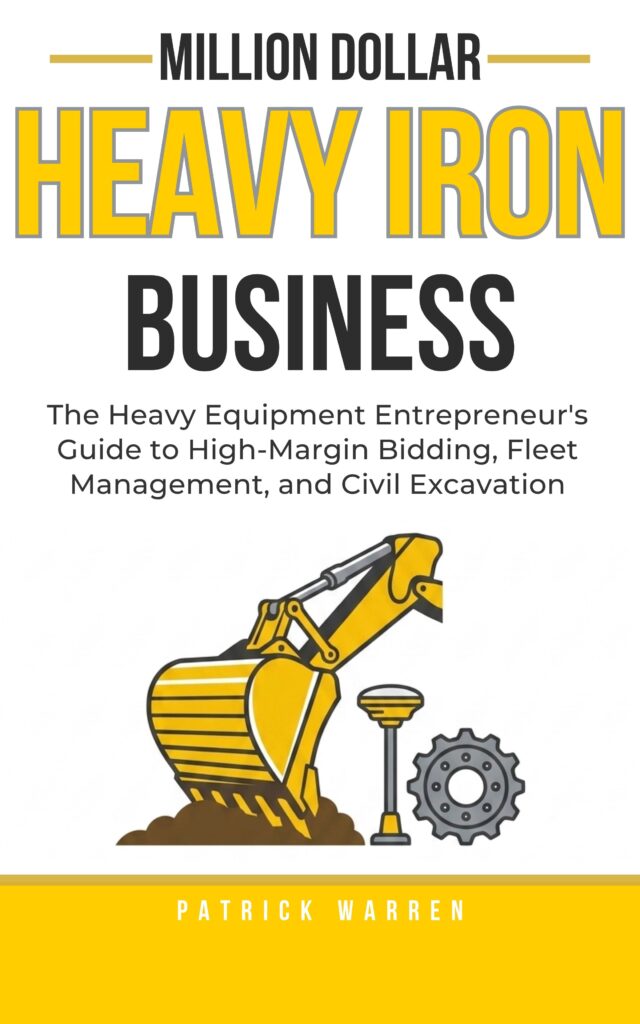
Strategic bidding, equipment sourcing, and operational blueprints for industrial-scale success in a high-revenue machinery operation. Solving these complex logistical and financial puzzles is exactly why I wrote Volume VII: Million Dollar Heavy Iron Business.
While this article tackles the basics of fleet math, the full 246-page technical manual provides the complete, field-tested answers to the other massive bottlenecks holding your business back:
- The Procurement Engine: Exactly how to source, lease, and finance heavy equipment to maintain maximum liquidity.
- The High-Stakes Bidding Framework: How to accurately project labor, overhead, and environmental contingencies so your seven-figure bids are both competitive and highly profitable.
- The Operational Blueprint: Systemizing your crew and equipment deployment so the business runs flawlessly whether you are on the site or not.
If you are ready to stop guessing on your mobilization costs and start running your heavy trade like a precision enterprise, grab the complete guide.
The Heavy Equipment Entrepreneur’s Guide to High-Margin Bidding, Fleet Management, and Civil Excavation
Check Out the Heavy Iron Volume on Amazon and make getting stuck in the margin mud a thing of the past.

- Exterior Painting in Autumn Rain: 5 Field Rules for High-Humidity Contracting - October 1, 2026
- The “Why” Behind the Reset: Reclaiming Your Landscaping & Lawn Mowing Profit, Time, and Sanity - September 15, 2026
- Getting Unstuck from the Rut: How Invisible Transport Costs and Bad Fleet Math Kill Heavy Trade Margins - August 3, 2026