To all the recent high school and community college graduates out there who got their diploma or certificate and are moving onto bigger and better things: Congratulations, you graduated.
You survived twelve to fourteen years of being told that your only path to success was sitting in a lecture hall for another two to four years, racking up $100k in student debt, and fighting a thousand other applicants for a cubicle job that could be outsourced by next Tuesday.
If you’re the hands-on type—if you crave adventure, tangible results, and high earning power—you already know the college trap isn’t for you. You want to build things. You want to burn rod. You want to get paid.
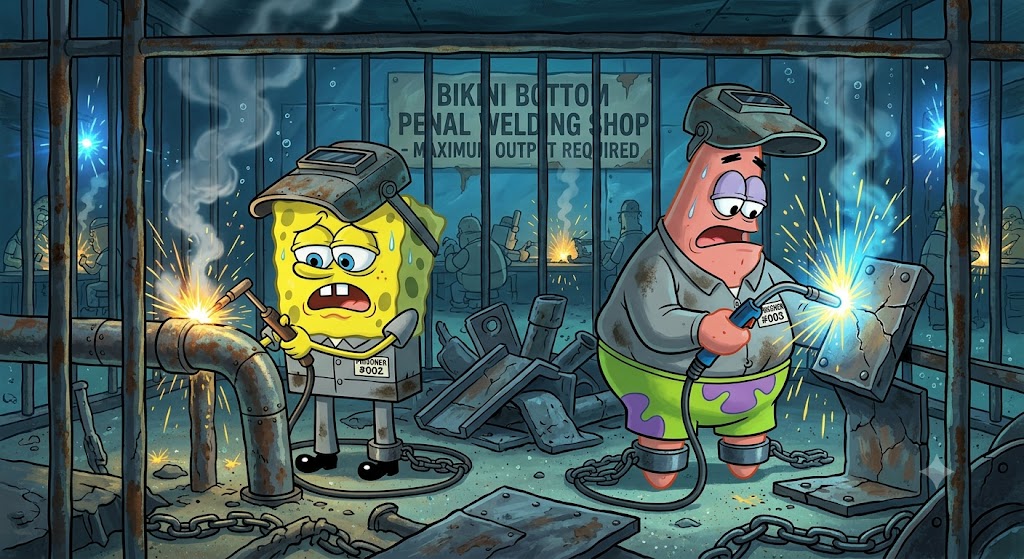
So, you look at the trades. But the second you step onto the field, the standard advice tries to lock you into a different kind of trap: The Shop Cage.
They tell you to play it safe. “Go get a local shop job, put your head down for five years, and sweep the floors until they let you weld.”
But a clever rookie plays a completely different game. To win, you have to understand the fundamental law of economic reality from day one: Risk = Reward. If you choose absolute safety, you are choosing absolute stagnation.
The Hard Math of the Shop Cage
Let’s pull back the curtain on the standard entry-level shop job and look at the brutal economics working against the greenhorn.
When you walk into a standard commercial or residential fabrication shop as a rookie, you might be thrilled to get a starting hourly wage. But look around the room. You are trapped inside a fixed ecosystem, and the math is strictly engineered against you:
- The Overhead Crush: The shop owner isn’t being evil; they are trapped by their own numbers. They have to pay for the commercial building lease, heavy machinery maintenance, massive insurance policies, electricity, and the salaries of non-producing staff (like secretaries and salespeople).
- The Flat-Rate Cap: Because of that massive overhead, the shop has to cap your hourly rate to survive. No matter how fast you burn rod, how pristine your beads look, or how much sweat you pour onto that concrete floor, your earning potential is hard-capped by a clock.
- Equity Building (For Someone Else): In the shop cage, you are trading your peak physical years, your lungs, and your eyesight to build someone else’s asset. You absorb 100% of the entry-level grunt work, while the house captures the true premium profit from the client.
If you stay inside that cage expecting to get rich, you are miscalculating the game. Absolute safety means low consequence. Low consequence means low margin. And, you might have trouble finding the right welding mentor to help you hone your skills and avoid pitfalls in the trade.
To break out of the low-wage cycle, you have to stop thinking like a component in someone else’s machine and start thinking like a tactical operator. You have to shift toward high-consequence niches where the stakes are high, but the payouts are massive.
The Three Paths: Where Do You Sit?
You don’t have to navigate this blind. There are three distinct paths you can take once you pick up a torch, and understanding them right now will save you a decade of wasted hustle.
In this video breakdown from the Million Dollar Industrial Welding Business playbook, we map out the exact structural differences between the Shop Rat, the Lone Wolf, and the General.
Check out the video above to see exactly why specific high-value metallurgy and advanced weld classifications dictate your earning power—and how to position yourself to win the game right out of the gate.
The Sovereign Shift: Moving to High-Consequence Niches
To break out of the low-wage cycle, you have to stop thinking like a helper and start thinking like an operator. You have to move toward high-consequence niches—environments where the stakes are high, but the payouts are massive.
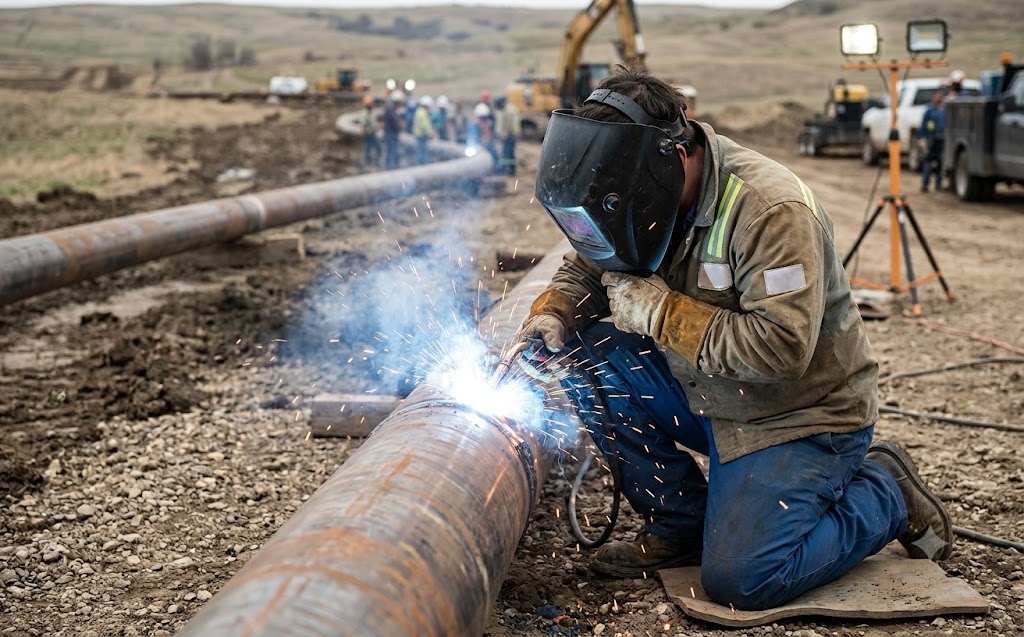
What is a high-consequence niche? It’s work where if the weld fails, operations halt, millions of dollars are lost, or things literally explode. Think heavy industrial fabrication, high-pressure pipe, specialized metallurgy, and field operations.
Average welders avoid these environments because they are intimidated by the pressure. Clever rookies run toward them. They realize that when you master specialized skills in high-stakes environments, the economic leverage flips completely in your favor. You stop competing with every hobbyist who bought a cheap rig on Craigslist, and you start commanding premium industrial dollars.
Your First Move as a Tactical Operator
If you’re sitting at the starting line this summer, you don’t have time to waste on a decade of trial and error. You need the blueprints the trade schools and entry-level shops will never give you.
Don’t settle for the illusion of a “safe” hourly wage while someone else builds an empire on your sweat. Figure out the game, pick your niche, and execute the shift.
👉 Get Ahead of the Competition: Read more chapters from Million Dollar Industrial Welding Business to get the tactical manual built to take you from tailgate sparks to high-stakes, high-leverage industrial success.

- The Facility Manager’s Guide to Mechanical ROI: How Modern Maintenance, Room Audits, and Refrigerant Shifts Protect Portfolio NOI - October 11, 2026
- The “Why” Behind the Reset: Reclaiming Your Landscaping & Lawn Mowing Profit, Time, and Sanity - September 15, 2026
- Exterior Painting in Autumn Rain: 5 Field Rules for High-Humidity Contracting - August 20, 2026