
For commercial asset managers and facility directors, the mechanical room is either a predictable line item or a ticking financial clock. When commercial HVAC systems are neglected or serviced with temporary fixes, the cost goes far beyond a single repair invoice. Emergency crane permits, expedited unit shipping, tenant lease disputes, and spiraling utility bills directly erode Net Operating Income (NOI).
Optimizing a property’s mechanical infrastructure requires shifting from reactive firefighting to structured operational maintenance. Here is how to spot hidden mechanical room red flags, navigate major industry refrigerant transitions, and build a Master Service Agreement (MSA) that protects your capital budget.
Part 1: 5 Red Flags Hiding in Your Mechanical Room
A routine walk-through of your mechanical spaces can reveal whether your current mechanical contractor is maintaining your assets or simply passing the buck until a major component fails. Watch for these five warning signs:
- Ghost Maintenance & Outdated Service Tags: Check the physical maintenance logs and equipment tags hanging from your chillers, air handlers, and RTUs. If the last recorded inspection was months ago—or if oil and compressor fluid sampling tags are completely blank—you are paying for “ghost maintenance.”
- Unaddressed TXV Hunting & Line-Set Vibration: Excessive vibration in copper refrigerant lines or severe temperature swings at the Thermal Expansion Valve (TXV) indicate improper charge levels or internal flow restrictions. Left uncorrected, continuous line vibration causes fatigue leaks and premature compressor burnout.
- Evaporator & Condenser Coil Fouling: A visible layer of dirt, biological growth, or scale on heat exchanger coils forces compressors to run continuously at elevated head pressures. Dirt acts as an insulator; just a 1/16-inch accumulation of dirt on a coil can degrade heat transfer efficiency by up to 21%.
- Band-Aid Electrical Repairs & Bypassed Controls: Look inside the main electrical contactor cabinets. Bypassed safety switches, charring on contact points, or loose wiring terminals are signs of quick-fix repairs designed to get a unit running temporarily while leaving the root electrical issue unaddressed.
- Slow Leaks and Oil Pooling Near Compressors: Refrigerant leaks carry compressor oil with them. If you see dark, sticky residue or oil spots near line joints, service ports, or the base of the compressor, your system is actively losing refrigerant and starving the compressor of critical lubrication.
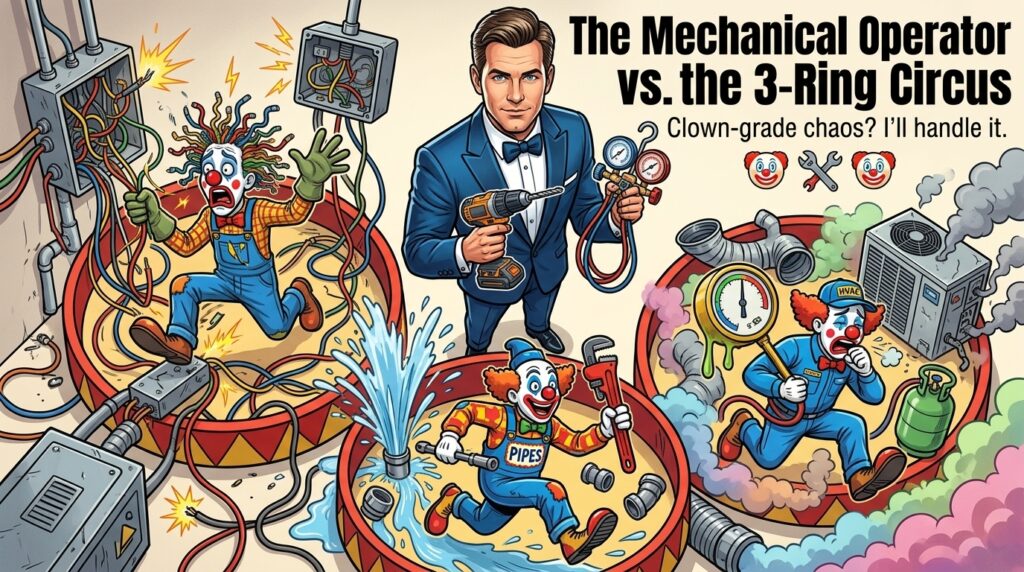
Learn about how to avoid the multi-trade 3-ring circus with this chapter from our new book:
Part 2: The Regulatory Horizon—Navigating the R-410A Sunset
Spotting physical equipment defects is only half the battle; commercial operators must also prepare for upcoming supply-chain constraints.
The ongoing EPA phase-down of legacy Hydrofluorocarbons (HFCs) is rapidly reducing the production quota of R-410A refrigerant in favor of lower-GWP A2L alternatives (such as R-32 and R-454B). For commercial portfolio managers, this shift presents two critical operational challenges:
- Escalating Service Costs for Legacy Systems: As virgin R-410A production drops, the cost to recharge leaking, older commercial systems will continue to rise sharply. Simply topping off a leaking 50-ton circuit will become a major, unbudgeted operating expense.
- Capital Planning & Equipment Lead Times: A2L refrigerants are classified as mildly flammable, requiring updated electrical specs, spark-free contactors, and integrated leak-detection sensors on modern equipment. You cannot simply drop A2L equipment into an older space without verifying line-set compatibility and mechanical room ventilation specs.
Waiting for an aging R-410A system to suffer a catastrophic failure during peak cooling season will result in multi-week lead times for replacement units and forced retrofits. Proactive capital planning requires auditing system health now to schedule orderly replacements before equipment dies under load.
Part 3: Preventative Maintenance vs. Emergency Replacement (The Real ROI)
The financial impact of a structured preventative maintenance program vs. reactive run-to-failure servicing is stark when mapped directly to property valuation and NOI:
| Operational Metric | Reactive Servicing (Run-to-Failure) | Structured Commercial MSA |
| System Lifespan | 8–11 Years (Early Compressor Failure) | 15–20+ Years (Full Design Life) |
| Energy Consumption | +15% to 25% higher due to coil fouling & low charge | Optimized airflow & charge lower energy use by 12–18% |
| Unplanned CapEx Spikes | High (Emergency replacements, crane permits, premium freight) | Low (Planned, phased capital replacements) |
| Tenant Satisfaction | Frequent temperature complaints & lease risk | Consistent climate control & high retention |
How Maintenance Drives Property Valuation
Commercial real estate valuations are tied directly to capitalization rates and Net Operating Income.
For example, on a commercial building operating at a 6% Cap Rate, every $10,000 saved in annual operating expenses (through reduced energy use and avoided emergency repairs) adds $166,667 in direct capital value to the property ($10,000 ÷ 0.06).
A comprehensive Master Service Agreement is not an operational overhead expense—it is a value-creation tool that protects tenant retention and increases the terminal value of the asset.
Here’s a chapter from our new book that details the exact process for hunting MSA opportunities in your region:
Next Steps for Your Portfolio
Don’t wait for peak summer heat to test the limits of your mechanical room.
- Perform a Mechanical Room Audit: Walk your mechanical spaces, review service tag histories, and check for oil residue or unaddressed vibration.
- Audit Your Refrigerant Exposure: Identify every unit in your portfolio currently running on R-410A and establish a 3-to-5-year equipment replacement timeline.
- Structure a Performance-Based MSA: Partner with a commercial mechanical contractor that provides comprehensive fluid analysis, coil cleaning schedules, and detailed lifecycle reporting.

Ready to turn operational headaches into predictable enterprise value? Pick up your copy of The Million Dollar Mechanical Operator: How to Build, Scale, and Systematize a High-Profit HVAC & Mechanical Contracting Business on Amazon today.
Whether you’re scaling a commercial service department or tightening your sub-tier operations, this hands-on manual gives you the exact playbooks, pricing frameworks, and execution checklists needed to protect your margins and dominate your market.

- The Facility Manager’s Guide to Mechanical ROI: How Modern Maintenance, Room Audits, and Refrigerant Shifts Protect Portfolio NOI - October 11, 2026
- The “Why” Behind the Reset: Reclaiming Your Landscaping & Lawn Mowing Profit, Time, and Sanity - September 15, 2026
- Exterior Painting in Autumn Rain: 5 Field Rules for High-Humidity Contracting - August 20, 2026